Welcome!
This website serves as a guide for teachers to integrate children's literature into students' learning about the civil rights.
Grade:
Subjects:
th

5th Grade
-Reading
-Writing
-Math
Standards
Georgia's Standard of Excellence
Click the buttons below to access Georgia's standards for 5th grade
Georgia's ELA
Standards
Georgia's Social Studies
Standards
Reading Standards
ELAGSE5RI6: Analyze multiple accounts of the same event or topic, noting important similarities and differences in the point of view they represent.
ELAGSE5RI5: Compare and contrast the overall structure (e.g., chronology, comparison, cause/effect, problem/solution) of events, ideas, concepts, or information in two or more texts
Writing Standards
ELAGSE5W1: Write opinion pieces on topics or texts, supporting a point of view with reasons. a. Introduce a topic or text clearly, state an opinion, and create an organizational structure in which ideas are logically grouped to support the writer’s purpose. b. Provide logically ordered reasons that are supported by facts and details. c. Link opinion and reasons using words, phrases, and clauses (e.g., consequently, specifically). d. Provide a concluding statement or section related to the opinion presented.
Social Studies Standards
SS5H6 Describe the importance of key people, events, and developments between 1950- 1975. a. Analyze the effects of Jim Crow laws and practices. b. Explain the key events and people of the Civil Rights movement: Brown v. Board of Education (1954), Montgomery Bus Boycott, the March on Washington, Civil Rights Act, Voting Rights Act, and civil rights activities of Thurgood Marshall, Lyndon B. Johnson, Cesar Chavez, Rosa Parks, and Martin Luther King, Jr. c. Describe the impact on American society of the assassinations of President John F. Kennedy, Robert F. Kennedy, and Martin Luther King, Jr. d. Discuss the significance of the technologies of television and space exploration
PURPOSE
The overall purpose of this guide and the lessons is to investigate the Civil Rights era and key individuals of that time. Several key people will be analyzed through the use of children's literature. Ultimately students will address writing standards based on the content and reading. Integrated curriculum allows time to be maximized in the classroom and for students to develop deeper understanding of each of the concepts and skills.
Instructional Goals

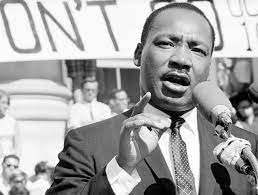
Students will know about the importance of Martin Luther King Jr.
Students will know what life was like during the civil rights movement for African Americans.
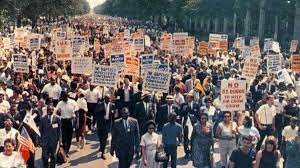
Students will know about the March on Washington and its importance.
What Students will be able to do
Students will be able to explain and describe the civil rights era.
Students will be able to compare important historical figures from the civil rights era.
Students will be able to quote accurately from a text.
What Students will Know
Students will know about the importance of Rosa Parks.
Students will be able write opinion pieces about the civil rights era.
Students will know about the importance of Thurgood Marshall.
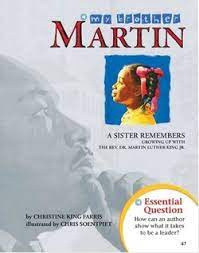
"My Brother Martin"
"My Brother Martin" by: Christine Farris King tells the story of Martin Luther King's early life. The author was Martin Luther King's sister and it provides a unique perspective of his life. The book talks about Martin's birth and some other interesting information such as his childhood nickname of M.L. It shares funny stories, but most importantly shares MLK's inspiration. When they were younger they had white playmates whose parents ended up putting a stop to their playtime and then moved out of town. The story goes on to tell about how their father's preaching was influenced by the events and how it inspired MLK and his future.
By: Christine Farris King
Summary
Amazon link to buy the book
This book offers an excellent diverse perspective. The author herself is African American and a cultural insider in that culture and group. She provides insight from the perspective of an African American during the Civil Rights era. The book describes real events of racism during the time and it also shows MLK's biggest inspiration, which inspired monumental events. Christine Farris King gives a unique first person perspective on MLK, which is diverse. As you can see Christine Farris King is a well recognized person and her perspective is important to look at.
Diverse Perspective


This book is appropriate for the elementary classroom, and is academically enriching. This book has literary merit as it has won the CCBC Choices Award (Book Connections, n.d.)
This book also aligns to the curriculum specifically Georgia's social studies standard SS5H6 which can be found on the standards page in this guide. This book is age, ability, and developmentally appropriate. It is written in a kid friendly way using age appropriate language, and it describes hard topics and history in a kid friendly way. This book is also interesting to kids. It shows them a part of MLK's life that normally isn't told. MLK is often a hero and role model to students which makes this book of interest to students. The author writes with both accuracy and authority. She is Martin Luther King's sister and she shares a first hand account of stories from their childhood. Christine Farris King is also a cultural insider of African American culture which also gives her authority in the book.
This book is written for 1st-3rd grade level students and is a lexile level of 970 (Scholastic, n.d.). There are many opportunities to differentiate with this book. This book could be read independently by lower level students or it could be read-aloud to them, as there are read-alouds everywhere online. The teacher could also read the book to the class in order to help teach the content and allow students to follow along with their own copy. If reading groups were to be used the pace of reading could be adjusted for level and other instructional goals and lesson objectives.
Differentiation
Justification
Christine Taylor Butler is an African
American which allows her to share
Rosa Parks biography from a more culturally accurate perspective and an insiders perspective. It helps to allow this book to serve as more of a window into the time of the Civil Rights movement. While the author did not go through the events herself her insight into her groups history and current culture makes the book more accurate and culturally relevant.
"Rosa Parks" by Christine Taylor Butler has the potential to be differentiated in a variety of ways. This book is for children ages 8-10, but the specific book level could not be found (Amazon, n.d.) First this book is separated by chapters, so students could be grouped and tasked to read different chapters based on their needs or need for more challenges. This book could also be differentiated by allowing students to listen to a read-aloud or an audio book. This book also has a variety of vocabulary which could be focused on for a variety of leveled learners.
Differentiation

Kansas City Cheifs read-aloud
Diverse Perspective
"Rosa Parks"
By: Christine Taylor Butler
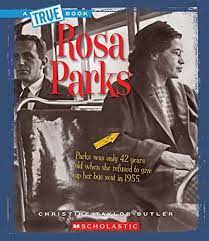
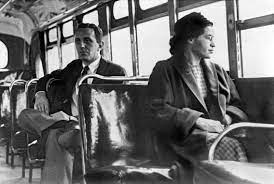
This book is extremely justified to use within the elementary classroom. "Rosa Parks" received an award and was named to The Amelia Bloomer Book List (American Library Association, n.d.). The author herself has won over 10 different awards from various different books (The Author's Guide, n.d.). This book also aligns to Georgia's curriculum in that it expects students to know about both Rosa Parks and the Montgomery Bus Boycott. This book is also developmentally appropriate. It is written specifically for children and uses kid friendly language to explain Rosa'a life and some of the hard history that occurred during that time. This book also greatly appeals to children's interest. It is written with an engaging word choice and shares interesting information that is not know to most students at this age. Finally this book is written with authority and accuracy. Relevant historical pictures are given, as well as accurate information about Rosa Parks life.
"Rosa Parks" by Christine Taylor Butler tells the life story of Rosa Parks and the story of the Montgomery bus boycott. The book starts out by giving information about her birth and her family. It told important stories about her parents divorce and how her grandfather protected them from the KKK. The book then tells about Rosa's experience going to school. Then readers learn about how she met her husband and their life together. It also talks about how her husband contributed to the Civil Rights movement. The book explains injustices that were done to her and injustices down to other young African Americans. It tells how Rosa was jailed and then all about the bus boycott. Finally the book tells of all her accolades and her death.
Justification
Summary
Diverse Perspective
Differentiation
The author of this book, Jonah Winter, is a caucasian male. This does not bring a diverse perspective to the story. Although the story wasn't written from a diverse perspective, it tells the story of an important African American, Thurgood Marshall, and about the Civil Rights movement. This book shows students what life was like during the Civil Rights movement, and shows students that life was hard for African Americans during that time. It shows that life wasn't easy. The book also tells how Thurgood was almost murdered by police, which shows students first hand how hard it was for African Americans during that time. The accuracy of this book does give it a diverse perspective.
"Thurgood" is written at a level for 5-9 year olds (Penguin Random House). Since it is written at a lower level compared to 5th grade it can help address the needs of lower leveled readers. This book like others has an online read-aloud. This allows students at a lower level to listen, and non english speakers to listen and hear the book instead of trying to decode and read independently. This book could be assigned to specific groups of students based on their reading level. The teacher could also plan an interactive read-aloud, in which different student needs could be addressed.
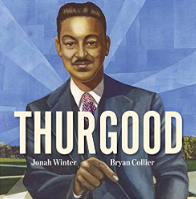
"Thurgood" by Jonah Winter and illustrated by Bryan Collier is about the life of Thurgood Marshall and his importance to the Civil rights movement. The book starts out explaining that from a young age everyone knew that Thurgood would be a lawyer. The book explains that Thurgood was arrested and why that happened. Readers learn about his educational experience and how he was captain of his debate team. His father would help him all the time practice his argumentation skills. The book also tells about more injustices done to him especially the denial into Maryland's law school. The book tells that the NAACP hired Thurgood and then explains all of his monumental cases. Finally it talks about Brown v.s. Board Education and how Thurgood won that monumental case.
Justification
"Thurgood" by Jonah Winter and illustrated by Bryan Collier is one of the most decorated books in this guide. Its' literary merit is extremely distinguished. This specific book has received 4 awards: ILA Teachers' Choices Reading List, Junior Library Guild Selection, Notable Social Studies Trade Books for Young People, and Center for the Study of Multicultural Children's Literature Best Books (Book Connections, n.d.). Jonah Winter, author, had also won the Coretta Scott King award 6 times, and Bryan Collier, illustrator, has won the Caldecott Honor 4 times (Penguin Random House, n.d.). Both of these awards are prestigious and contribute to the literary merit of the book. This book also aligns to the curriculum in that social studies standard SS5H6 explicitly lists Thurgood Marshall. This book is developmentally appropriate. It explains each case and each incidence of violence in a kid friendly yet realistic way. The illustrations are also done in a kid friendly way, which is also engaging and appealing to students. The book also talks to the readers in sections, which engages and appeals to students. Finally this book is written accurately and explains important parts of Thurgood's life correctly.
Summary
"Thurgood"
By: Jonah Winter and Bryan Collier
Diverse Perspective
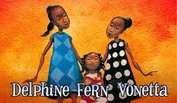
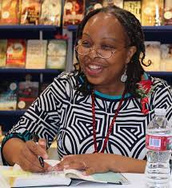
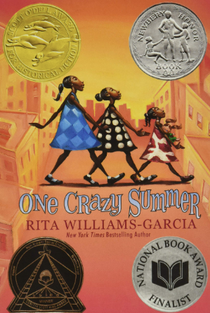
"One Crazy Summer" by Rita Williams-Garcia is written from a diverse perspective. It was written by Rita Williams-Garcia who is African American. Her perspective is unique and makes the book even more authentic. This book also follows three young African American sisters and that in itself represents diverse perspectives because young African American women were marginalized and still are marginalized in children's literature. It shows their experiences accurately which brings a diverse perspective on the civil rights movement to children. This book is a clear window into African American life in the civil rights era.
Differentiation
"One Crazy Summer"
"One Crazy Summer" is written for kids from 5th-7th grade and is a lexile level of 750 (Scholastic, n.d.). With this being a 5th grade and higher level book it can help meet the needs of grade level and advance level students. It could be given specifically to students who are on this reading level for book groups. Some chapters could be read aloud if students need more support. There are also audio books available to students who are struggling to read it or who would prefer to read it in a different modality.

By: Rita Williams-Garcia

Link to buy on Amazon
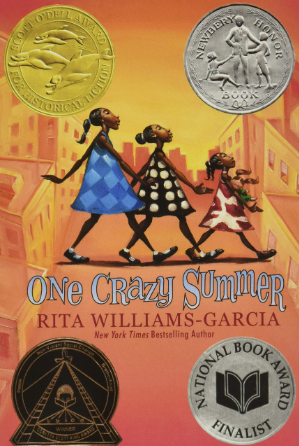
"One Crazy Summer" by Rita Williams-Garcia is a highly decorated and awarded book. This book has been recognized by many reputable organizations. "One Crazy Summer" was awarded the Coretta Scott King Author Award, the Newbery Honor, and was a National Book Award finalist (Scholastic Book Clubs, n.d.) . Each of these awards carry great value in the children's literature community. This literary merit also completely justifies its use in the elementary classroom. This book also address the social studies standard of SS5H6 which explicitly states that students need to describe and explain the civil rights movement. This book is also developmentally appropriate as it is written for and at a 4th-7th graders level. The book also addresses civil rights history in an understandable and real way. This real way is appropriate for kids but it still is accurate in the hard history that it tells. This book also is very appealing to elementary children. The characters are the same age as them which allows students to really relate to them and what they went through. The first person narration also aids in this. This book is also written with great authority and accuracy. It accurately describes the time and about the Black Panthers.
Summary
Justification
"One Crazy Summer" by Rita Williams-Garcia is a chapter book with 33 chapters. This book is about 3 sisters who move to California to be with their mother. In the story the girls go to an all black camp where they start to see activism first hand. Her mother wasn't very motherly to them while they were there. The girls come to find out that their mother is a part of the Black Panther group and actually writes poems to support their activism. Towards the end of the book her mother gets arrested again for writing her poetry. The girls then speak at a rally where they share one of their mother's poems. Finally the girls head back home to be with their Pa.
Summary
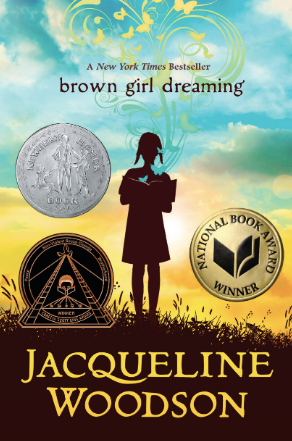
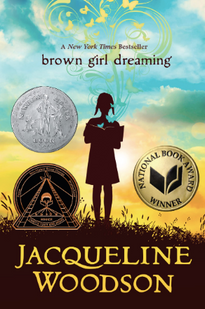
"Brown Girl Dreaming"
By: Jacqueline Woodson
"Brown Girl Dreaming" By Jacqueline Woodson is a book about a young African American girl and her family navigating life in the civil rights era. The beginning of the book talks about her life and her parents divorce. The main character and her siblings get left with their grandparents while their mother searches for them a better life. They finally move to New York where they discover and learn more about the civil rights movement. Through the story the main character learns to write.
Diverse perspective
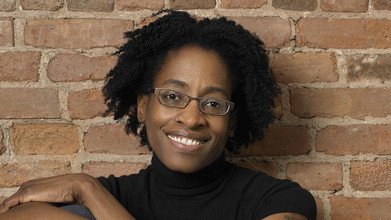
"Brown Girl Dreaming" By Jacqueline Woodson offers a diverse perspective in many different ways. To start Jacqueline Woodson is an African American woman. Her perspective allows her to write the book more accurately and more culturally relevant. She also represents African Americans in her book and their experiences during the civil rights movement. Finally this book discusses several different religions and integrates those perspectives as well. Another important diversity asset to this book is that it discusses learning disabilities as well as giftedness. Since the main character has dyslexia this also provides a unique perspective.
Justification
"Brown Girl Dreaming" By Jacqueline Woodson is a book of high esteem and literary merit. Its' numerous awards justify its use within the public school classroom. "Brown Girl Dreaming" has particularly won the National Book Award, Newbery Honor, Coretta Scott King Award, NCTE Notable Children's Book in Language Arts, Boston Globe-Horn Honor Book, Robert F. Sibert Award, & Notable Social Studies Trade Books for Young People (Scholastic, n.d.) . These awards alone should justify its use in the classroom. In 5th grade students are expected to learn about the Civil Rights. Georgia social studies standard SS5H6 specifically addresses this. This book explains the civil rights movement to the young characters in the book as well as the readers. The Civil Rights movement is explained in an accurate way and teaches students about the hard history of the civil rights movement. This book is also fairly developmentally appropriate. It is written in the range of a 7th grader which is two years older than 5th grade. Although it is a harder level it still addresses the concepts in an appropriate way. This book is also very appealing to kids. It is written about kids like them and it is a narrative style which greatly engages and relates to the students.
Differentiation
"Brown Girl Dreaming" is written for 10-18 year olds or 5th-12th grade students, and it is a 990 lexile level (Scholastic, n.d.). This book would serve as more of a challenge in a 5th grade classroom since it is a higher level. It could be read-aloud by a teacher or given to higher reading level groups to challenge students. This book also has an audio book option which could help average and lower level students be able to read it.

Check Out this must see video from Alicia Keys about the book
Justification
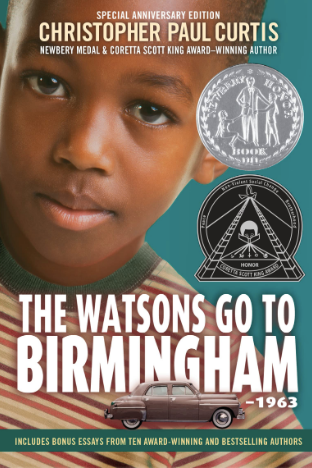
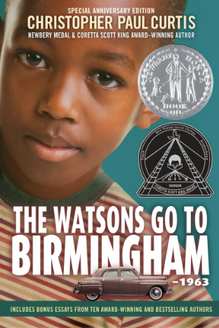
Christopher Paul Curtis has earned many awards from this book. Each of these awards mean a lot in the children's book community, and contribute to why this book should be read in the elementary classroom. This book has earned the Newbery Honor, Coretta Scott King Award, American Library Association Top Ten, American Library Association Notable Childrens' Book, International Reading Association Young Adult's Choice, & NY Times Book Review Best Book (The Best Children's Books, n.d.). This book also directly supports and connects to Georgia's social studies standard SS5H6, which expects students to be able to explain the civil rights movement. This book is also developmentally appropriate for 5th grade. It is written for students in 5th-8th grade. While the book does portray violent events such as a bombing, the book describes it in a age appropriate way and explains it in a way a 5th grade can understand. This book is also very engaging to students. First the characters are relatable and the same age as our readers, which really engages them. This book also has 4.5 stars and 4,600 reviews on amazon which shows that people really love and engage with this book (Amazon, n.d.). This book is also historically accurate. It portrays events in the Civil Rights movement accurately and even addresses church bombings correctly. This books serves as a window and is extremely just in its use in the classroom.
Summary
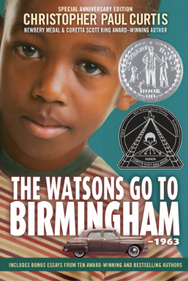
"The Watsons go to Birmingham" by: Christopher Paul Curtis starts out in Michigan and follows an African American family of 5. Another family moves into their town who were from the south. The first part talks about them, how they were treated, and their interactions with the Watson boys. Then they go to visit their grandmother in Birmingham. They get to see what the south and Alabama looked like during the time of the Civil Rights Movement. Towards the end there is a church bombing which shakes up the children. They rush home and finally deal with the trauma caused by the bombing.


"The Watsons go to Birmingham"
Check Out this movie clip based on the book
Diverse Perspective
"The Watsons go to Birmingham" by: Christopher Paul Curtis provides a diverse perspective to the classroom. The author is African American which provides a more authentic perspective on the civil rights movement. This book follows an African Americans family perspective which was not represented for along time in literature. This book is also diverse in that addresses poverty and socio-economic issues as the Alabama family was poor and the children were often bullied. The diverse perspective provides an authentic view of life in the 1960's.
"The Watsons go to Birmingham" by: Christopher Paul Curtis is written at a level for students 5th-8th grade. This would provide grade level students a book to read as well as some students who are above grade level. This book does have an audiobook form and it also has a movie that could be shown to children. These options could help grade level readers as well as lower level readers.
Differentiation
By: Christopher Paul Curtis

Lessons
To use in your 5th grade classroom
End in mind
Goals
By the end of this unit students will be able to explain and describe the civil rights movement including key events and people.
By the end of this unit students will be able to write an opinion piece about the civil rights era. They will be expected to support their ideas from information presented in the books read in class.
Lesson #1
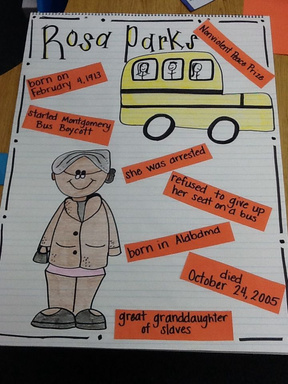
In this section the teacher will read-aloud "My Brother Martin" By: Christine Farris King. The teacher will model how to quote accurately from within a text. She will pick out meaningful quotes from the first half of the book and record them on an anchor chart. The teacher will show students the correct grammatical way to write a quote in your writing.
I Do
Hook
We Do
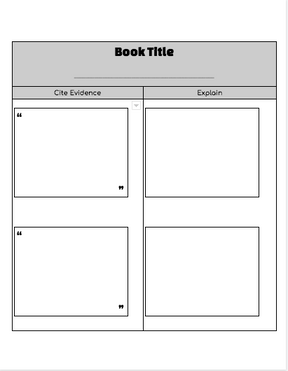
In this section the teacher will allow students to pick quotations that were meaningful to them. They will help the teacher correctly format the quotation and copy this down on their own graphic organizer. They will be given a chance to practice with less support for the second box with a quote from the book.
You Do
In this section the teacher will give students another copy of the graphic organizer to students. Students will be asked to quote from their own book club books that were chosen at the start of the unit.
Books to be used
Graphic Organizer
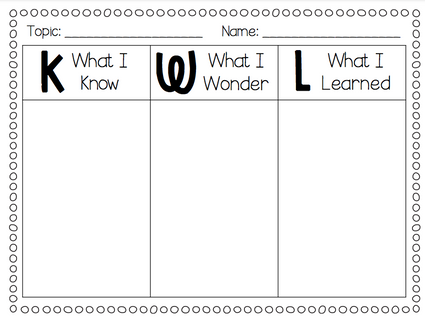
In this lesson a KWL chart will be the main formative assessment. The teacher will also assess the graphic organizer students do in the you do section of the lesson.
Pre-assessment Post assessment

Lesson #1
Justification of the Lesson
This lesson is directly aligned to Georgia's Social Studies standard of "SS5H6" which can be found on the standards page of this teacher guide. In summary students are expected to be able to explain and describe important events and people from the Civil Rights movement. This lesson directly addresses Martin Luther King Jr. and parts of his life that are often unknown to children. This lesson also teaches students to learn how to quote accurately which is addressed in Georgia's ELA standard of ELAGSE5RL1 which will help build to the writing standards later.
Description of the Lesson
In this lesson the teacher will use "My Brother Martin" by Christine Farris King in order to model for students how to pull and use quotations appropriately from the text. Before modeling the teacher will hook the students in by playing them a video about the civil rights movement that addresses Martin Luther King Jr. and his contributions. The teacher will also give a quick pre-assessment by having students fill out and briefly discuss a KWL chart. Then the teacher will read "My Brother Martin" aloud and will model how to quote accurately from the text. This could all be modeled using an anchor chart. After that the teacher will use the graphic organizer to have students quote a sentence from the book together, and then the students will do another one with less support and more teacher assistance. Finally the teacher will give students another graphic organizer for students to practice with their own book club books. They will be tasked to give two direct quotes and to explain its importance. At the end of the lesson the teacher will collect this graphic organizer and will give students feedback. As a whole group the teacher will conclude the lesson by filling out the KWL learned section and by restating the main points of the day.
Differentiation of the Lesson
This lesson can be differentiated in a variety of ways. There is an audio book version so students can go back and listen if they need or would like. Book club groups are also differentiated by student interest and readiness with their reading levels. Content will be both delivered through videos and through different anchor charts and examples. The product and assessment could be differentiated by adapting it and giving more support. For instance an example can be provided on their graphic organizer. The teacher can also add important things like "said," into the graphic organizer for them.
Lesson #2
Hook
Books to be used
I Do
During this section the teacher will use "Rosa Parks" and do an interactive read-aloud. The teacher will emphasize key points that students need to know about Rosa Parks life and contributions. The teacher can also record these things on an anchor chart so that students can go back and refer to them when they are writing later on in the unit. The teacher will make planned comments to compare MLK and Rosa Parks.
We Do
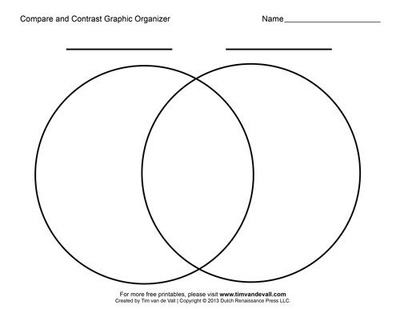
In this portion the student and teacher will work together to discuss both Rosa Parks and MLK from the day before. The teacher will have a compare and contrast graphic organizer for the teacher and student to fill out comparing the two key figures. The teacher will start and then will gradually release the responsibility to the students.
You Do
Students will then be given a chance to compare and contrast their characters from their book club book to their choice in either Rosa Parks or Martin Luther King Jr. The teacher will go around and support students as they need. The teacher will also assess this graphic organizer and give students feedback. This will help to support them in their final writing. The teacher will urge students to use their direct quotes.
Graphic Organizer
Your anchor chart could look like this

Lesson #2
Justification of the Lesson
This lesson is directly aligned to Georgia's Social Studies standard of "SS5H6" which explicitly states that students need to be able to describe and explain the civil rights movement and key historical figures from that time. This lesson also addresses the ELA standard of "ELAGSE5RI6" which wants students to be able to identify similarities and differences between books about the same topic. Comparing and contrasting in this lesson helps them to think about the similarities and differences in the things they are learning through different books about the civil rights movement.
Description of the Lesson
In this lesson the teacher will read aloud the book "Rosa Parks" In this section the teacher will record important facts for students to be able to reference later on when they start writing about the civil rights movement. During the read-aloud the teacher will think aloud and make comparisons to what they learned about Martin Luther King Jr. the day before. This will help students see how to compare and contrast the key historical figures. After that the teacher and the students will work together during guided practice to fill out a compare and contrast graphic organizer of Rosa Parks and Martin Luther King Jr. The teacher will gradually give the students more responsibility. Finally students will get in their book club groups that they were assigned to at the beginning of the unit. They will be given another compare and contrast graphic organizer where they will be asked to compare one of their characters to Martin Luther King Jr. or Rosa Parks. As students finish they will turn this in and the teacher will formally assess it. The teacher will be looking to see if the student has a good understanding of the social studies content and their ability to compare and contrast.
Differentiation of the Lesson
This lesson could be differentiated in several different ways. Content could be differentiated by allowing students to view videos about Rosa Parks life instead of having them just read the book. Students could be given a fact sheet in order to help them remember and be able to compare and contrast throughout the lesson. Process could be differentiated by giving students another comparison graphic organizer other than the venn diagram. One that has two separate boxes for each person would be effective. Students will also be given different graphic organizers for independent practice, and more options for them to compare the two people.
Lesson #3
Hook
Books to be used
I Do
We Do
You Do
During this section the teacher will read the book "Thurgood" aloud to the students. The teacher will think aloud at this point to bring up comparisons to the other books and people while reading. The teacher will model how to constantly be thinking about similarities and differences while reading.
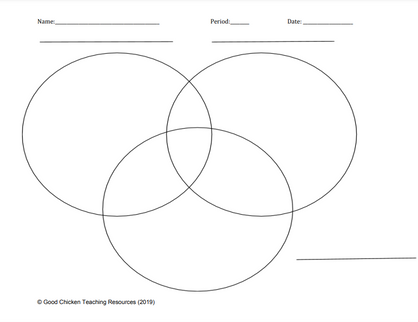
During this section the teacher and the students will compare the similarities between the books read in the first 2 lessons. They will compare the historical figures and the books in general. The teacher and students will share the responsibility of completing the venn diagram/graphic organizer.
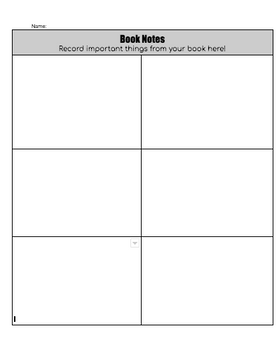
At this point in the lesson students will go back to reading their book club groups. The teacher can also meet and read with students at this point. The teacher will give students a notes sheet where they need to record important things from their book. They will be told that this will help give them information to write about later on in the unit. Students will also be challenged to keep working with direct quotes.
Venn Diagram
Book Notes
Justification of the Lesson
Lesson #3
This lesson also directly addresses the social studies standard of "SS5H6" which addresses the civil rights movement and expects students to learn about Thurgood Marshall. The venn diagram also gets students thinking about the similarities and differences between the books and the topics that they are covering. That specific standard is "ELAGSE5RI6". This lesson is building towards students writing opinion pieces were they are able to compare and contrast information they have learned.
Description of the Lesson
In this lesson the teacher will read aloud the book "Thurgood". The teacher will continue to model how to think and compare similarities and differences by making connections to the other books that had been read earlier in the unit. After that the teacher and the students will work through a venn diagram/graphic organizer in order to compare Martin Luther King Jr., Rosa Parks, and Thurgood Marshall. The teacher will reinforce the skill of adding direct quotes in this section too. During independent practice students will be given time to read their book club books. They will also be given a notes sheet for them to record their important information from their book. During this time the teacher will conference with students and will formally assess their understanding of the civil rights movement. The teacher will help students based on their needs at this time. After students are given time to read and work the teacher will close the lesson by restating the important comparisons they talked about earlier. As a final assessment the teacher will ask students to summarize what the civil rights movement was on a ticket out the door sticky note.
Differentiation of the Lesson
This lesson also could be differentiated by allowing students to take notes on their book in any way that they choose. Within the process category students can write and take notes in their own venn diagram. They can also record their ideas for the comparisons in any way that helps them best/ Content can be differentiated by giving students fact sheets about Thurgood Marshall to put in their journal in order to help them remember those things more and use them more readily.
Lesson #4
Hook
Books to be used
I Do
We Do
You Do
The teacher will start with the video to hook the students in to the lesson and give them an idea of what the March on Washington looked like. The teacher will then go through a powerpoint to explain all the key aspects of the March on Washington to the students. The teacher will talk about the timeline of the books read compared to the march on Washington
The teacher will then guide the students in a discussion about the march on Washington. The teacher will prompt the students by showing a few questions on the board. The teacher will first share their thoughts and then will ask for student input. This will serve as a putting it all together discussion.
At this point the teacher will have students meet with their book club groups. The teacher will pop in and conference with each group. They will be given a set of guiding questions for them to discuss. The teacher will designate a recorder and then will formally assess this later on. To close groups will be asked to share their biggest takeaways.

Justification of the Lesson
Lesson #4
This lesson like each in the unit addresses the same social studies standard that expects students to know about the civil rights era. This standard also explicitly states that students need to be able to explain the March on Washington. Students in 5th grade are also supposed to be able to write opinion pieces. This lesson allow students to verbally practice sharing their ideas and their opinions. Later students will be asked to write their ideas down on paper instead of discussing them with their group.
Description of the Lesson
In this lesson the teacher will explicitly teach about the March on Washington. The teacher will start at the hook with an engaging video that shows actual footage from the march. The teacher will then explain the importance of the march and key information related to it. The teacher will also make sure to emphasize when this was in context of the books that have already been read in the unit. After they learn this new information they will engage in a guided discussion in which the teacher will actively participate along with the students. The discussion will help connect all of the ideas talked about and will also focus on comparing and contrasting between all the facts and information they have been taught so far. Finally the students will get to meet with their book club groups and will discuss similar questions to the guided discussion. During this time the teacher will split her time and meet with each of the book club groups. She will provide support as needed and will also pull students to further support them in their needs. The teacher will informally assess during this time. Finally each group will share their biggest takeaways to the class.
Differentiation of the Lesson
To differentiate content the teacher can choose prompts that suits each students readiness level, so that everyone can be engaged. The teacher can give slotted notes to help students learn and retain the content. Students can take notes however they would like during the I do section. During the whole group discussion students can make verbal or visual points by showing their thoughts in a visual form. Finally book club groups can be further differentiated based on need and can be subdivided.
Lesson #5
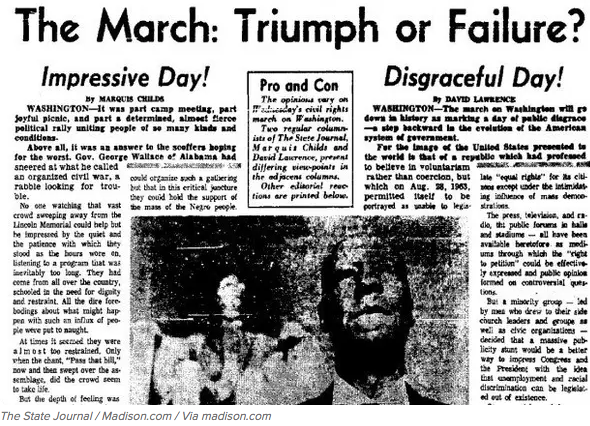
The teacher will start by drawing attention to the hook and note that writers shared their opinions in the news and how that contributed to the civil rights movement. The teacher will then model how to write an opinion piece and will show their writing to the students. The teacher will also give students some ideas that they could write their opinion pieces about.
I Do
Hook
The teacher will then share an example with the students. The teacher will give each student a copy. They will work through and analyze how the student integrated the content and quoted from their readings to support their ideas. The teacher will allow them to mark and note things as they see it.
We Do
You Do
Finally students will start writing their opinion pieces. The teacher will give students a choice board with different ideas they can write about and different ways that they can write it in. At this time the teacher will walk around and conference with each of the students.
Books to be used
Potential Prompts
-Who was the most important person to the civil rights movement and why?
-What was the most defining moment from the civil rights movement?
-Would the civil rights have been different without Thurgood Marshall?
Lesson #5
Justification of the Lesson
This lesson again addresses the social studies standard that expects students to explain the civil rights movement. Now students are actually getting to where they can actually explain the civil rights era and key events and people that were associated. Students finally are working on the Georgia standard of ELAGSE5W1 which expects students to write opinion pieces where they support their reasons. This writing serves as a way to wrap up and connect everything that has been learned.
Description of the Lesson
In this lesson the teacher will draw attention to the importance of opinion writing of the time. The teacher will also draw a connection to "One Crazy Summer" and "Brown Girl Dreaming" and how writing was so important. The teacher will then show an example of one of her opinion pieces about the civil rights movement. She will model what theirs should look like and will share some potential prompts. In the guided practice section the teacher and students will read and look into a students example. They each will also have their own copy, and they will work through and note and highlight good things and things that could have been better, After that discussion students will start working on their own opinion pieces. They will be given a choice board where they will have different ways they can write their pieces and about different content that they can write about. During this time the teacher will conference and go around to help students with each need that they have. The teacher may also pull groups as needed. The teacher with informally assess the writing during this time.
Differentiation of the Lesson
In this students could be given more examples to look at during the I do section to further support student learning and for their later use. Students can also participate in guided practice either on the computer or with a written copy. Finally the most differentiation occurs during the independent practice section with their products. The choice board gives students a variety of ways that students can do their opinion writing pieces and in different modalities.
A whole teacher guide for the book "Brown Girl Dreaming"
Resources

More Civil Rights Unit Plans

Works Cited
Amazon. (n.d.). Rosa Parks (A True Book: Biographies. Amazon.
https://www.amazon.com/Rosa-Parks-True-Christine-Taylor-Butler/dp/0531212092
Amazon. (n.d.). The Watson's Go to Birmingham-1963. Amazon.
https://www.amazon.com/Watsons-Birmingham-1963-Christopher-Paul-
Curtis/dp/0440414121
American Library Association. (n.d.). Rosa Parks. American Library Association.
https://www.ala.org/awardsgrants/rosa-parks
Book Connections. (n.d.). My Brother Martin: A Sister Remembers Growing Up with the
Rev. Dr. Martin Luther King Jr. Book Connections.
https://www.bookconnections.org/tb.cgi?tid=4788
Book Connections. (n.d.). Thurgood. Book Connections.
https://www.bookconnections.org/tb.cgi?tid=63970#Award
Penguin Random House. (n.d.). Thurgood. Penguin Random House.
https://www.penguinrandomhouse.com/books/554491/thurgood-by-jonah-winter-
illustrated-by-bryan-collier/
Scholastic. (n.d.). Brown Girl Dreaming. Scholastic. https://shop.scholastic.com/parent-
ecommerce/books/brown-girl-dreaming-9780147515827.html
Scholastic. (n.d.). My Brother Martin. Scholastic. https://shop.scholastic.com/teachers-
ecommerce/teacher/books/my-brother-martin-9780439581431.html
Scholastic. (n.d.). One Crazy Summer. Scholastic.https://shop.scholastic.com/teachers-
ecommerce/teacher/books/one-crazy-summer-9780545447843.html
Scholastic Book Clubs. (n.d.). One Crazy Summer. Scholastic.
https://clubs.scholastic.com/one-crazy-summer/9780545447843-rco-us.html?
cgid=6_1&categorybreadcrumb=%7C%20Coretta%20Scott%20King%20Author%20Award%20%7C%20Schneider%20Family%20Award
The Author's Guide. (n.d.). Christine H. Taylor-Butler. The Author's Guide.
https://go.authorsguild.org/members/1491
The Best Children's Books. (n.d). The Watson's Go to Birmingham-1963 By:Christopher
Paul Curtis. The Best Children's Books. https://www.the-best-childrens-
books.org/The-Watsons-Go-to-Birmingham.html